
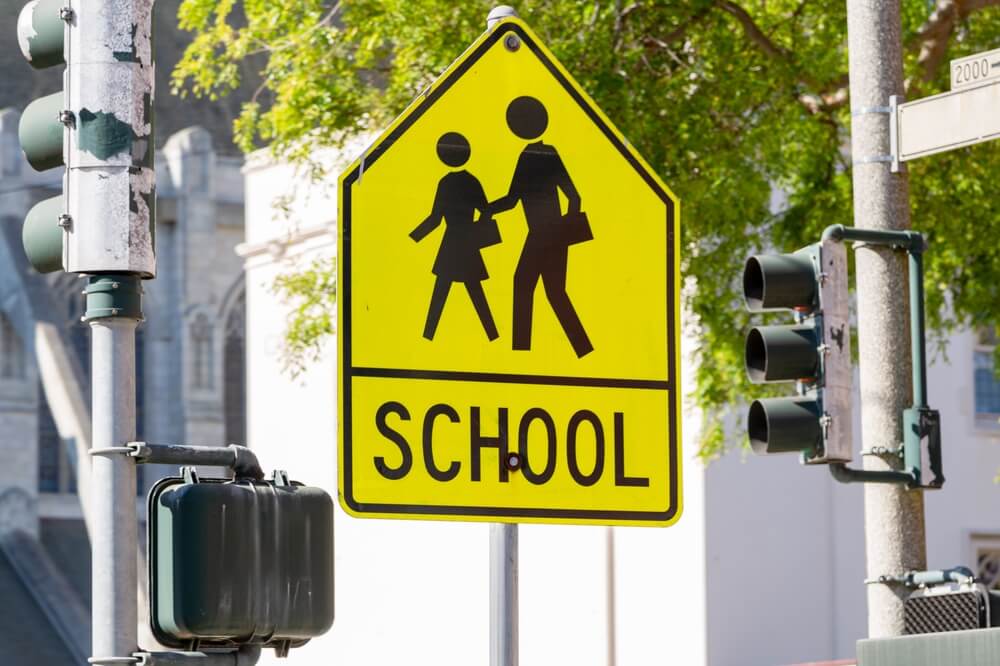
Back-to-School Pedestrian Safety: Legal Rights When Children Are Injured in School Zone Crossings
The back-to-school season brings a renewed sense of energy to our communities. Yellow buses are back on the roads, backpacks are filled with fresh supplies, and children’s laughter once again fills our schoolyards. However, this time of year also brings an increased risk for our youngest and most vulnerable pedestrians.
The busy activity around schools, combined with morning and afternoon traffic, creates a hazardous environment where a moment of inattention can lead to devastating consequences. When a child is struck by a vehicle in a school zone, the aftermath is not just about physical injuries; it’s about understanding your family’s legal rights and the path to securing the resources needed for a full recovery.
What Are the Unique Dangers Children Face in School Zones?
School zones are, by nature, areas of concentrated activity. Children, especially younger ones, can be unpredictable. Their smaller stature makes them harder for drivers to see, and they may not have the developmental maturity to accurately judge the speed and distance of an approaching vehicle.
Several factors contribute to the heightened risk in school zones:
- High Pedestrian Volume: A large number of children are walking, biking, and crossing streets at the same time, often in groups.
- Traffic Congestion: The convergence of school buses, parent drop-offs, and regular commuter traffic creates a congested and often chaotic environment.
- Driver Distraction: Drivers may be rushing to get to work, talking on their phones, or otherwise not giving their full attention to the road.
- Child Impulsivity: A child might suddenly dart into the street to catch up with friends or retrieve a dropped item, not fully appreciating the danger.
- Poor Visibility: Parked cars, school buses, and even foliage can obstruct a driver’s view of a child waiting to cross.
These elements combine to create a perfect storm for potential accidents, making it imperative for drivers to exercise an elevated level of caution.
What Are the Specific Traffic Laws for South Carolina School Zones?
South Carolina law recognizes the increased danger in school zones and imposes stricter rules on drivers to protect children. These laws are not mere suggestions; they are legal requirements with serious penalties for violations.
- Reduced Speed Limits: All designated school zones have a significantly reduced speed limit, which is in effect during specific hours, typically when children are arriving at or leaving school. These times are usually indicated by flashing lights or posted signs. It is a driver’s responsibility to be aware of and strictly adhere to these lower speed limits.
- Prohibition on Passing: It is illegal for a driver to overtake and pass another vehicle that has stopped for a pedestrian in a crosswalk.
- School Bus Laws: Drivers traveling in both directions must stop for a school bus with its red lights flashing and stop arm extended. The only exception is on a divided highway with a median; in that case, only traffic following the bus must stop.
Failure to obey these laws can result in significant fines, points on a driver’s license, and, most importantly, can serve as direct evidence of negligence in a personal injury claim.
Who Has the Right-of-Way in a School Zone Crosswalk?
The question of right-of-way is a central point in many pedestrian accident cases. In South Carolina, the law is designed to give pedestrians priority in most crosswalk situations.
- Marked Crosswalks: Drivers are legally required to yield the right-of-way, slowing down or stopping if necessary, for any pedestrian who is in a marked crosswalk.
- Unmarked Crosswalks at Intersections: Even at intersections without painted lines, the law defines an “unmarked crosswalk” as the natural extension of the sidewalk across the street. Drivers must still yield to pedestrians in these areas.
- Crossing Guard Signals: A school crossing guard’s instructions supersede standard traffic signals and signs. Drivers and pedestrians must obey the crossing guard’s directions to stop or proceed.
While pedestrians have the right-of-way, they also have a duty to exercise reasonable care for their own safety. However, the law places a higher burden of care on drivers, who are operating heavy machinery capable of causing catastrophic harm.
What Are Common Causes of Child Pedestrian Accidents?
Understanding the cause of an accident is fundamental to establishing liability. While each case is unique, most school zone pedestrian accidents stem from some form of driver negligence.
Common causes include:
- Distracted Driving: This is a leading cause of accidents everywhere, but it is particularly dangerous in a school zone. Texting, adjusting the radio, or attending to other passengers diverts a driver’s attention from the road.
- Speeding: Exceeding the posted school zone speed limit dramatically reduces a driver’s ability to react and stop in time to avoid hitting a child.
- Failure to Yield: Many drivers simply fail to see or yield to children in crosswalks, often due to impatience or inattention.
- Impaired Driving: Driving under the influence of alcohol or drugs impairs judgment, coordination, and reaction time, making it impossible to operate a vehicle safely.
- Illegal Maneuvers: Making improper turns, disregarding a crossing guard’s signal, or illegally passing a stopped school bus can lead directly to a collision.
- Poor Weather Conditions: While not a form of negligence in itself, drivers have a duty to slow down and drive more cautiously in rain, fog, or other adverse conditions that reduce visibility.
What Types of Injuries Commonly Result from These Accidents?
Because a child’s body is so vulnerable against the force of a motor vehicle, the injuries sustained are often severe and can have lifelong consequences.
These injuries frequently include:
- Traumatic Brain Injuries (TBIs): A blow to the head can cause anything from a concussion to a severe TBI, which may result in permanent cognitive or developmental impairments.
- Spinal Cord Injuries: Damage to the spinal cord can lead to partial or complete paralysis, forever changing the course of a child’s life.
- Broken Bones and Fractures: Children’s bones are still developing, and fractures to the legs, arms, and pelvis are common, often requiring surgery and extensive rehabilitation.
- Internal Organ Damage: The impact can cause life-threatening damage to internal organs, leading to internal bleeding and other complications.
- Severe Lacerations and Abrasions: Often called “road rash,” these injuries can be deep, painful, and result in significant and permanent scarring.
- Psychological Trauma: Beyond the physical pain, the emotional and psychological impact can be immense. Children may suffer from Post-Traumatic Stress Disorder (PTSD), anxiety, and a newfound fear of roads and traffic.
The cost of treating these injuries can be staggering, encompassing immediate medical care, ongoing rehabilitation, and potential needs for future accommodations and therapies.
How Is Fault Determined When a Child Is Hit by a Car?
To secure compensation for your child’s injuries, you must establish that the driver was at fault. In legal terms, this means proving the driver was negligent.
Proving negligence involves demonstrating four key elements:
- Duty of Care: The driver had a legal duty to operate their vehicle with reasonable care to avoid harming others. This duty is heightened in a school zone.
- Breach of Duty: The driver breached that duty by acting carelessly or violating a traffic law (e.g., speeding, texting while driving).
- Causation: The driver’s breach directly caused the accident and your child’s resulting injuries.
- Damages: Your child and family suffered actual harm, such as medical bills, pain and suffering, and other losses.
A thorough investigation is required to gather the evidence needed to prove these elements. This includes police reports, witness statements, photos of the scene, and sometimes, input from accident reconstruction professionals.
What Compensation Can Be Recovered After a School Zone Pedestrian Accident?
A successful personal injury claim can provide financial resources to cover the wide range of losses your family has suffered. This compensation, known as damages, is typically divided into two categories.
Economic Damages are for calculable financial losses:
- Medical Expenses: This includes all costs from the emergency room visit, hospital stays, surgeries, physical therapy, medications, and any anticipated future medical care.
- Lost Wages: If a parent had to miss work to care for the injured child, they may be able to recover those lost earnings.
- Loss of Future Earning Capacity: If the child’s injuries are permanent and will impact their ability to work and earn a living as an adult, compensation can be sought for this future loss.
Non-Economic Damages are for intangible, personal losses:
- Pain and Suffering: Compensation for the physical pain and emotional distress the child has endured.
- Emotional Anguish: For the fear, anxiety, and psychological trauma resulting from the accident.
- Loss of Enjoyment of Life: If the injuries prevent the child from participating in sports, hobbies, and other activities they once enjoyed.
- Disfigurement: For permanent scarring or physical deformities caused by the accident.
What Is the Legal Process for a Child Pedestrian Injury Claim in South Carolina?
Navigating the legal system can be intimidating, but a knowledgeable legal team can manage the process on your behalf.
The typical stages of a claim include:
- Investigation: Your legal team will gather all evidence, including police reports, medical records, and witness statements, to build a strong foundation for the claim.
- Demand and Negotiation: A demand letter will be sent to the at-fault driver’s insurance company, outlining the facts and the compensation sought. This usually initiates a period of negotiation.
- Filing a Lawsuit: If the insurance company refuses to offer a fair settlement, a lawsuit may be filed. This moves the case into the formal litigation process.
- Discovery: Both sides formally exchange information through written questions (interrogatories) and sworn testimony (depositions).
- Mediation: Often, the court will require the parties to attend mediation, where a neutral third party helps them try to reach a settlement.
- Trial: If a settlement cannot be reached, the case will be presented to a judge or jury, who will render a final verdict.
Is There a Time Limit for Filing a Claim in South Carolina?
Yes. Every state has a law called the “statute of limitations,” which sets a strict deadline for filing a personal injury lawsuit. In South Carolina, the general statute of limitations for personal injury claims is three years from the date of the accident.
For minors, this rule can sometimes be extended. However, waiting to act can make it much harder to gather evidence and build a strong case. It is always best to seek legal advice promptly to ensure all deadlines are protected.
How Nowell Law Firm Can Help
When your child has been hurt, the weight of their pain, your worry, and the mounting financial pressure can feel unbearable. You should not have to face this challenge alone. At Nowell Law Firm, we are dedicated to lifting that legal burden from your shoulders. We handle the complexities of the investigation, the frustrations of dealing with insurance companies, and the demands of the legal process so that you can dedicate your energy to your child’s recovery.
If your child was injured in a pedestrian accident, we are here to provide the support and advocacy your family needs. Schedule a consultation today to discuss your situation and learn more about your legal options. Call us at 864-707-1785 or reach out to us online to connect with our team.


Leave a Reply
Want to join the discussion?Feel free to contribute!