
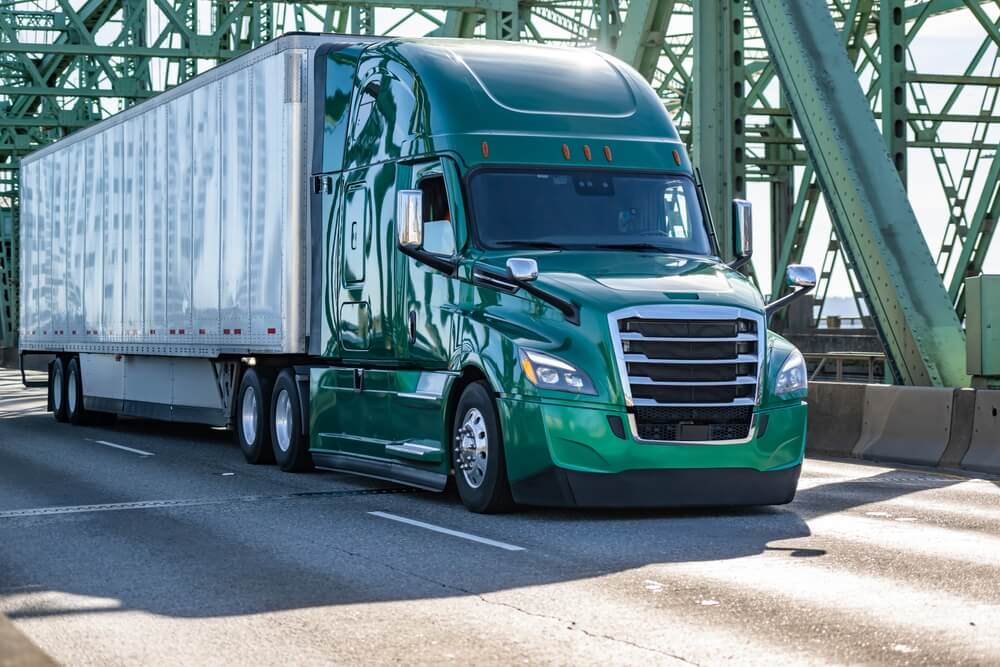
How Cargo Loading Errors Can Lead to Truck Accidents in South Carolina
The commercial traffic across the Upstate is relentless. From the heavy industrial transport moving through Spartanburg County to the sprawling logistics hubs along the Interstate 85 corridor, passenger vehicles share the road daily with massive commercial fleets. While most drivers intuitively recognize the dangers of a fatigued or distracted tractor-trailer operator, a less obvious but equally devastating hazard often lies hidden behind the closed doors of a trailer: cargo loading errors.
When an 80,000-pound machine operates at highway speeds, the laws of physics dictate the outcome of every maneuver. If the freight inside that trailer shifts, the entire vehicle can become an uncontrollable weapon.
How Do Cargo Loading Errors Cause Truck Accidents in South Carolina?
Cargo loading errors cause truck accidents in South Carolina by drastically shifting a vehicle’s center of gravity during transit. When improperly secured freight moves, the sudden transfer of momentum forces the trailer into uncontrollable jackknifes, dangerous rollovers, or pushes the cab forward, overwhelming the air brake system.
The mechanics of a modern commercial truck are carefully engineered to handle massive amounts of weight. That engineering relies entirely on the assumption that the payload is stable and fixed. As commercial trucks navigate the winding stretches of the Asheville Highway or the steep elevation changes heading toward the mountains, their stability is continually tested.
Centrifugal force pushes against the side of the trailer during curves, while immense forward momentum drives the trailer toward the cab during hard braking. When loading dock workers or freight forwarders fail to properly secure the materials, those goods move independently of the trailer. A sudden shift of several tons of steel, agricultural produce, or industrial machinery will forcefully jerk the trailer in the direction of the shifting weight.
This violent, unexpected movement can literally pull the steering wheel out of the driver’s hands, making it impossible to maintain the lane. The consequences on crowded, high-speed roadways are typically catastrophic. When a trailer tips over or swings out of its lane, it becomes a multi-lane barricade that surrounding passenger vehicles cannot avoid.
Key physical reactions caused by shifting cargo include:
- Altered braking distance: Forward-shifting weight pushes the truck violently ahead, overwhelming the air brake system and rendering the driver unable to stop in time.
- Center of gravity shifts: Top-heavy or side-heavy trailers cause the vehicle to tilt dangerously during simple lane changes or highway merges.
- The pendulum effect: Unsecured liquid tanks or loose freight sloshing back and forth creates severe trailer sway, leading to a total loss of directional control.
- Jackknifing: The shifting trailer’s momentum pushes the cab sideways when the load slides forward during a sudden stop or emergency braking maneuver.
What Are the Most Common Types of Commercial Cargo Loading Errors?
The most common commercial cargo loading errors include overloading the trailer beyond the 80,000-pound federal weight limit, failing to balance the freight evenly across the axles, using defective tie-down straps, and neglecting to properly block and brace materials to prevent lateral movement during transit.
The logistics industry moves at a blistering pace. The constant pressure to meet tight delivery schedules often leads to rushed, negligent loading processes. When warehouse workers cut corners on the loading dock to save time, the resulting errors fall into several distinct and highly dangerous categories.
Overloading is a frequent violation. Federal regulations strictly restrict the gross weight of a standard commercial truck. When shipping companies attempt to transport more goods in a single trip to artificially inflate profit margins, the truck’s mechanical systems are pushed well beyond their engineered capacity.
This excess weight directly violates the South Carolina Code of Laws Section 56-5-4140, which strictly regulates gross vehicle weight to protect both road infrastructure and public safety. This significantly increases stopping distances, making devastating rear-end collisions in stop-and-go traffic on Interstate 26 a frequent occurrence.
Unbalanced loads present a much more deceptive risk. Even if a truck is technically under the legal weight limit, placing too much weight on one side or concentrating heavy items near the rear doors completely alters how the vehicle handles. A trailer that is heavier on the left side is highly susceptible to rolling over when taking a right-hand curve or navigating a steep exit ramp.
Common loading dock failures include:
- Exceeding weight capacities: Overwhelming the structural integrity of the trailer and the stopping power of the braking systems.
- Improper weight distribution: Failing to balance the load accurately over the steering, drive, and trailer axles.
- Insufficient tie-downs: Using frayed straps, damaged chains, or fewer securement devices than required by federal safety guidelines.
- Lack of blocking and bracing: Failing to use wood dunnage or structural braces to prevent cargo from sliding forward or backward during transit.
What Are the Specific Dangers of Flatbed Versus Enclosed Trailers?
Flatbed trailers pose the immediate danger of cargo ejecting directly onto the highway and striking trailing motorists. Conversely, enclosed dry van trailers conceal shifting freight until the internal momentum causes the entire trailer to roll over or forcefully jackknife without any visual warning to surrounding drivers.
When a flatbed truck is improperly loaded, the danger is visible but incredibly sudden. Flatbeds routinely transport construction materials, steel coils, lumber, and heavy machinery. If a strap snaps or a chain fails due to improper tensioning, the cargo falls directly into the path of trailing vehicles.
A single dropped load of lumber on Highway 29 can trigger a massive multi-car pileup as drivers swerve erratically to avoid the debris. The South Carolina Department of Public Safety regularly responds to these types of severe hazard events.
Enclosed “dry van” trailers hide their loading errors behind aluminum walls. Passenger car drivers have no visual warning that the pallets inside the truck next to them are sliding dangerously close to the trailer edges. The enclosed nature of the trailer also means that drivers picking up the load often rely entirely on the word of the warehouse workers regarding the stability of the freight.
Both trailer types require highly specific securement methods:
- Flatbed securement: Requires direct tie-downs, edge protection to prevent strap fraying, and constant visual inspections by the commercial driver.
- Enclosed securement: Requires interlocking pallets, airbags placed between freight to prevent lateral movement, and load-securing bars.
- Tanker trailers: Require internal baffles to manage the movement of liquid cargo; failure to fill the tank to the proper level causes deadly fluid shifts known as “slosh.”
How Do Federal Regulations Govern Cargo Securement?
The Federal Motor Carrier Safety Administration governs cargo securement by dictating the exact minimum number of tie-downs based on freight length and weight. These strict federal rules mandate specific working load limits and require that all materials be firmly immobilized by structures of adequate strength.
The safety of our roadways relies on strict compliance with the FMCSA Cargo Securement Rules. These comprehensive mandates are not industry suggestions; they are the non-negotiable legal standard of care that the commercial trucking and shipping industry must follow to protect the public.
The federal government dictates exactly how many tie-downs must be used based on the length and weight of the payload. For example, a heavy piece of industrial machinery being transported through Spartanburg County must be secured by specific chains that possess an aggregate working load limit equal to at least one-half the weight of the article itself. If an item is longer than 10 feet, additional securement devices are mandatory.
Furthermore, federal rules mandate that the cargo must be firmly immobilized or secured on or within a vehicle by structures of adequate strength. Closed-box trailers cannot simply be filled haphazardly; the pallets must be braced so they cannot shift. When our attorneys investigate a commercial crash, reviewing these specific federal guidelines serves as our baseline for determining corporate negligence. If the loading team failed to meet these standards, they breached their duty to public safety.
Who is Liable for an Improperly Loaded Truck Accident in the Upstate?
Liability for a cargo-related truck accident in the Upstate may fall on the commercial driver for failing to inspect the load, the trucking carrier for negligent training, the shipping facility for improper packing, or the third-party freight loaders who bypassed mandatory securement protocols before transit.
Identifying the at-fault party in a cargo loading case is a highly complex legal undertaking. Unlike a standard two-car collision where one driver is clearly to blame, commercial crashes often involve a web of corporate entities. We meticulously unravel the supply chain to determine exactly where the safety failure occurred.
The commercial driver holds the primary, on-the-road responsibility for the vehicle. Federal law requires drivers to perform thorough pre-trip inspections and visually verify that their freight is secure before turning the ignition. They are also required to pull over within the first 50 miles of a trip, and periodically thereafter, to re-check their load. If a driver accepts a load they know is unsafe, or entirely fails to inspect it, they share the liability.
However, liability frequently extends beyond the cab of the truck to the shipping company or the third-party logistics facility that packed the trailer. In modern freight operations, drivers frequently pick up pre-loaded, sealed drop-and-hook trailers that they never physically look inside. If warehouse workers in Greenville packed the pallets unsafely before sealing the doors, that specific facility bears significant legal responsibility.
Potentially liable parties include:
- The Commercial Driver: For failing to conduct mandatory pre-trip and en-route cargo safety inspections.
- The Trucking Carrier: For negligent training, providing faulty securement equipment, or enforcing delivery schedules that discourage safety checks.
- The Shipping Facility: For improperly loading, balancing, or bracing the freight before transit.
- Third-Party Freight Loaders: Independent dock contractors who bypass safety protocols to meet daily loading quotas.
How Do We Prove a Cargo Loading Error Caused the Crash?
We prove cargo loading errors caused a crash by issuing spoliation letters to preserve the damaged trailer, securing the vehicle’s electronic control module data, auditing weigh station logs, analyzing bills of lading, and partnering with forensic reconstructionists to evaluate the physical debris field.
Evidence in commercial motor vehicle crashes is highly perishable. When a rollover occurs on Interstate 85, the trucking company’s rapid response team will be on the scene within hours. Their primary goal is to clear the wreckage, move the freight, and minimize their corporate financial exposure. To counter this defense strategy, legal representation must act with equal speed and precision.
The initial investigative step involves issuing formal preservation letters to the trucking company, the shipping facility, and the warehouse. This legally prohibits them from destroying vital documents, overwriting surveillance footage, or repairing the trailer before our investigators can examine it.
We meticulously analyze the bill of lading, which details exactly what was loaded, how much it weighed, and which specific warehouse employees signed off on the securement. We cross-reference this documented weight with records from state weigh stations. Physical evidence at the crash site is equally critical. The pattern of skid marks on the pavement, the direction the trailer tipped, and the distribution of the cargo in the debris field tell an objective story of momentum and physics.
Vital evidence in loading error cases includes:
- Bills of Lading: To determine the exact weight, dimensions, and nature of the transported freight.
- Electronic Control Module Data: To analyze the vehicle’s braking, throttle position, and steering behavior leading up to the crash.
- Weigh Station Logs: To verify if the truck actively bypassed scales or exceeded federal axle weight limits during its route.
- Loading Dock Surveillance: Securing video footage from the warehouse to observe exactly how the pallets were loaded and secured before departure.
Where Can Commercial Collision Victims Seek Local Medical Treatment?
Victims of severe commercial collisions in the Upstate often require advanced trauma care for spinal cord damage or traumatic brain injuries. Emergency medical services routinely transport injured individuals to major local facilities like Spartanburg Medical Center or Prisma Health Greenville Memorial Hospital for immediate surgical intervention.
The physical toll of a collision with a fully loaded commercial truck is catastrophic. Passenger vehicles simply do not possess the structural integrity to withstand the crushing weight of a shifted trailer or heavy falling freight. The injuries sustained in these high-impact crashes, such as traumatic brain injuries, spinal cord damage, crush injuries, and severe orthopedic trauma, are rarely minor.
Victims frequently require immediate, advanced trauma care. Following a severe commercial accident in the Upstate, emergency responders rapidly transport injured individuals to major regional trauma centers. The medical interventions required demand extensive surgeries, prolonged inpatient rehabilitation, and comprehensive life care plans that project medical needs decades into the future.
The financial burden of this level of medical care can accumulate rapidly, threatening a family’s financial stability. Because these crashes are caused by corporate negligence on the loading dock or behind the wheel, securing full compensation means accurately projecting not just the current hospital bills, but all future medical needs, lost earning capacity, and the profound impact on daily quality of life.
Contact Our South Carolina Commercial Vehicle Legal Team
The moments after a severe commercial accident blur together into a chaotic sequence of hospital lights, insurance calls, mounting medical bills, and questions about who is ultimately at fault. The legal team at Nowell Law Firm is completely dedicated to helping families in Spartanburg, Greenville, and across the Upstate secure the justice and financial stability they deserve.
Our knowledgeable attorneys handle the stressful investigations and the daily battle with massive commercial insurance carriers so that you can focus your energy on physical recovery. Most personal injury attorneys work on a contingency fee basis, which means you don’t pay any attorney’s fees unless we win your case.
To discuss your specific case in a private setting and learn exactly how we can assist with your claim, schedule a free, confidential consultation by calling us or by reaching out to our team online.


Leave a Reply
Want to join the discussion?Feel free to contribute!