
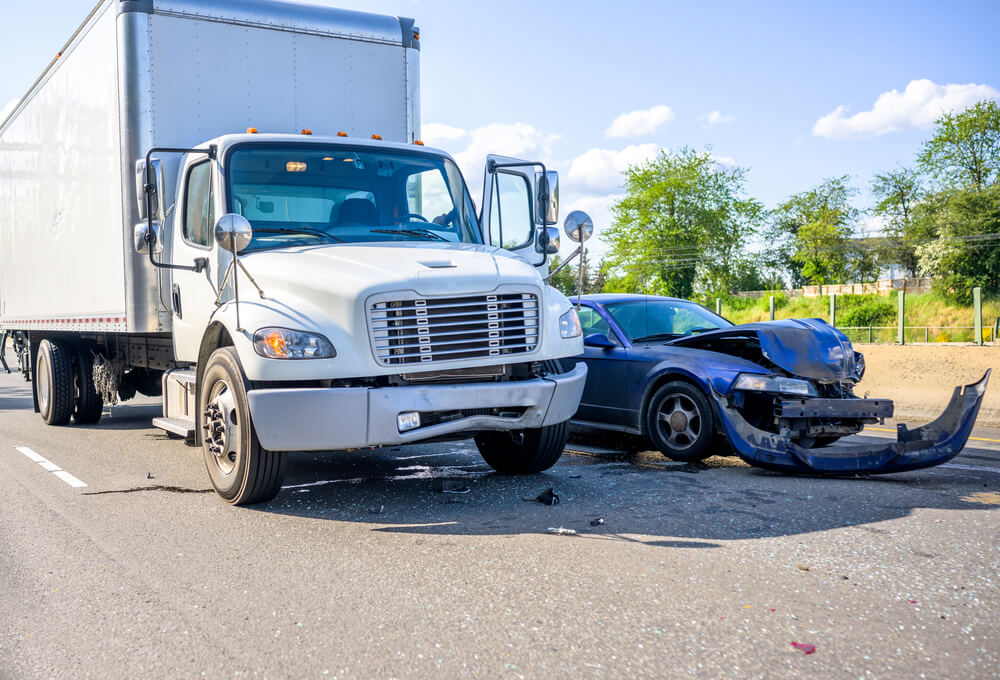
Why Truck Accident Cases Are More Complex Than Regular Car Accidents in South Carolina
A collision with an 80,000-pound commercial tractor-trailer on Interstate 85 or Interstate 26 changes a family’s life in a fraction of a second. The physical devastation resulting from an 18-wheeler impact is rarely comparable to a standard passenger vehicle crash. Beyond physical trauma, victims quickly discover that the legal process following a commercial vehicle collision is vastly different from a typical passenger car accident. Multiple corporate entities, complex federal safety mandates, aggressive insurance defense teams, and electronic data streams transform commercial trucking litigation into a distinct legal battleground.
Navigating the aftermath of a catastrophic wreck requires a thorough understanding of state and federal motor carrier regulations. At Nowell Law Firm, we represent injured individuals across Upstate South Carolina, holding negligent motor carriers and corporate entities accountable. Unraveling the legal complexities of commercial truck accidents reveals why these cases demand a strong legal strategy.
How Does a Commercial Truck Collision Differ from a Standard Car Wreck?
Commercial truck collisions differ from standard car wrecks due to massive kinetic impact forces, specialized federal safety standards, multi-million dollar corporate insurance policies, and complex corporate ownership models. Uncovering liability requires immediate preservation of digital logging data, black box recorders, and detailed commercial driver qualification records.
The fundamental difference between a standard car crash and a commercial truck wreck begins with basic physics. A fully loaded semi-truck can weigh up to 80,000 pounds, whereas the average passenger vehicle weighs approximately 4,000 pounds. This weight disparity creates immense kinetic energy during a crash, leading to catastrophic structural collapse of smaller vehicles and severe physical harm for occupants.
Beyond physical mechanics, commercial trucking operations function within a dense matrix of state and federal regulatory frameworks. While a standard car accident involves two private drivers and their personal auto insurance policies, a tractor-trailer crash involves corporate entities, federal operating mandates, and multi-layered commercial liability coverages. Key structural differences include:
- Massive Impact Force: The extreme kinetic energy transfer in heavy vehicle collisions causes severe spinal cord injuries, traumatic brain injuries, and complex fractures far more frequently than automobile wrecks.
- Higher Insurance Policy Limits: Commercial motor carriers carry primary liability policies ranging from $750,000 to tens of millions of dollars in excess coverage, driving corporate insurers to contest liability aggressively.
- Complex Evidence Preservation: Commercial trucks contain engine control modules (ECMs), electronic logging devices (ELDs), and telematics systems that capture crucial pre-crash speed, braking, and steering data.
- Corporate Defense Interventions: Insurance companies dispatch specialized rapid-response teams directly to Upstate crash sites within hours to secure physical evidence and shape the narrative in favor of the motor carrier.
Who Can Be Held Liable In A South Carolina Truck Accident?
In a South Carolina commercial truck accident, multiple parties may share liability, including the truck driver, the trucking company, cargo loading crews, maintenance facilities, and truck part manufacturers. Under the doctrine of respondeat superior, trucking companies are legally responsible for the negligence of their employees while on duty.
In a standard automobile collision, fault usually begins and ends with the drivers operating the vehicles. Commercial trucking operations rely on an interconnected network of individuals, contractors, and corporate managers. Identifying every negligent entity is essential for securing full financial compensation.
Under the legal doctrine of vicarious liability (respondeat superior), a commercial motor carrier is generally responsible for negligent acts performed by its employee drivers during their scope of employment. Furthermore, trucking companies can be held directly liable for their own corporate negligence. Parties that frequently share fault in commercial vehicle accidents include:
- The Commercial Truck Driver: Drivers can be held liable for reckless driving, distracted driving, driving while fatigued, speeding, or operating under the influence of drugs or alcohol.
- The Motor Carrier / Trucking Company: Carriers are liable for negligent hiring, improper driver training, forcing drivers to exceed statutory driving hours, and failing to perform mandatory background safety checks.
- Third-Party Cargo Loaders: Independent logistics facilities that miscalculate weight distribution, overload trailers, or fail to secure cargo properly can cause fatal rollover crashes or spilled freight hazards.
- Maintenance and Repair Contractors: Third-party mechanical repair shops that perform faulty brake overhauls, ignore worn tire treads, or fail to correct known mechanical defects share liability for structural failures.
- Equipment and Component Manufacturers: If a crash stems from defective tire blowouts, brake failures, or steering mechanism flaws, manufacturers can be held strictly liable under product liability standards.
How Do Federal FMCSA Regulations Impact Your Truck Crash Claim?
Federal Motor Carrier Safety Administration regulations dictate hours of service, mandatory drug testing, and vehicle maintenance standards for the commercial trucking industry. If a driver or trucking company violates these federal rules before a crash, that violation serves as powerful evidence of negligence in your South Carolina injury claim.
Commercial interstate trucking operations are governed by the Federal Motor Carrier Safety Administration (FMCSA), an agency within the United States Department of Transportation. These federal safety regulations dictate operational aspects of commercial transport. Establishing that a motor carrier or driver violated federal rules provides compelling evidence of legal negligence.
For example, federal safety rules set mandatory driver operational limits under 49 CFR Part 395 Hours of Service regulations. These rules restrict property-carrying commercial drivers to a maximum of 11 hours of driving time within a 14-hour duty window after 10 consecutive hours off duty. Regulations also mandate rest breaks, weekly driving caps, and systematic vehicle inspection records under 49 CFR Part 396.
When an investigation reveals that a trucking company pressured a driver to falsify logbooks, bypass mandatory rest breaks, or skip required vehicle inspections to meet tight delivery deadlines, the violation transforms a standard negligence claim into a clear case of regulatory non-compliance. This proof is critical when seeking full compensatory damages for injured victims.
What Role Do Electronic Logging Devices (ELDs) Play in Proving Fault?
Electronic Logging Devices (ELDs) automatically track a commercial driver’s hours of service, speed, and braking patterns. These federally mandated devices provide objective digital evidence to prove if a driver was illegally fatigued, speeding, or violating rest break requirements right before a crash occurred.
In decades past, commercial drivers maintained paper logbooks to record driving hours and rest periods. This manual system made falsification relatively easy. Today, federal rules mandate that commercial motor vehicles operate with synchronized Electronic Logging Devices (ELDs) connected directly to the vehicle’s engine control module.
ELD data provides an objective digital timeline of events leading up to a collision. These electronic control modules record key operational metrics, including precise satellite location data, exact speed at impact, hard braking applications, engine throttle position, and driver seatbelt status. Analyzing this raw data allows forensic accident reconstruction professionals to recreate the exact sequence of events.
Digital evidence is vulnerable to destruction or overwriting. Commercial motor carriers are only required under federal rules to preserve certain electronic records for limited timeframes sometimes as short as 30 days for electronic logging data. Sending an immediate formal spoliation letter is vital to force the carrier to preserve onboard computer records, dashcam video, and maintenance logs before they are purged.
How Does South Carolina’s Comparative Fault Law Affect Commercial Accidents?
South Carolina follows a modified comparative fault rule under S.C. Code Section 15-38-15. This means you can recover compensation for a truck accident as long as you are 50 percent or less at fault. If a jury finds you 51 percent or more responsible, you recover nothing.
Determining fault in a motor vehicle collision requires analyzing specific legal rules governing comparative negligence in the jurisdiction. Under S.C. Code Section 15-38-15, South Carolina adheres to a modified comparative fault system with a 51 percent bar rule.
Under this statutory framework, an injured plaintiff can recover financial compensation only if their percentage of responsibility for the crash is equal to or less than 50 percent. If the injured victim is allocated 51 percent or more of overall fault, they are barred from receiving financial recovery. Furthermore, if the victim is determined to be 20 percent at fault, their total damage award is reduced proportionally by 20 percent.
Because commercial trucking insurance claims involve substantial monetary figures, defense attorneys actively exploit this comparative fault threshold. Corporate adjusters will scrutinize every detail of the crash alleging that the passenger vehicle driver was speeding or changing lanes abruptly in an explicit effort to push the victim’s fault allocation to 51 percent and eliminate financial liability entirely.
Why Do Trucking Insurance Companies Fight So Hard to Deny Claims?
Trucking insurance companies aggressively deny claims because commercial policies carry massive limits, often exceeding one million dollars. To protect their corporate profit margins, specialized defense teams immediately deploy to the crash scene to hide evidence, pressure victims into lowball settlements, and shift comparative fault onto the injured driver.
A standard personal automobile insurance policy in South Carolina may carry minimum coverage limits of $25,000 per person for bodily injury. Commercial trucking companies, conversely, maintain primary policy limits starting at $750,000 for non-hazardous freight and extending to $5,000,000 or more for hazardous cargo carriers.
With millions of dollars on the line in a single severe crash claim, commercial insurers deploy aggressive defense strategies. Shortly after a major wreck on I-85 or Highway 29, the carrier’s risk managers deploy specialized accident reconstructionists directly to the scene to control physical evidence collection.
Insurance adjusters frequently contact vulnerable crash victims while they are recovering in hospital beds, offering quick settlement amounts before the true extent of long-term medical care, surgeries, and disability are known. Accepting early offers requires signing a binding release of all future claims, permanently blocking the victim from seeking additional compensation when medical bills mount later.
What Is the Statute of Limitations for Filing a Truck Accident Lawsuit in South Carolina?
Under South Carolina Code Section 15-3-530, victims generally have exactly three years from the date of a commercial truck accident to file a personal injury or wrongful death lawsuit. Failing to file within this strict legal deadline will permanently bar you from seeking any financial compensation.
Time is a critical element in commercial vehicle litigation. Under S.C. Code Section 15-3-530, the statutory deadline for filing a personal injury or wrongful death lawsuit in South Carolina is three years from the date the accident occurred.
While three years might appear to provide ample time, delaying legal action in a commercial truck case can destroy a claim. Physical evidence at the crash site—such as skid marks and asphalt gouges—fades rapidly under weather and traffic flow. Surrounding commercial business surveillance video is routinely overwritten after 14 to 30 days. Witnesses move away or forget crucial observations.
Shorter statutory deadlines apply if the commercial truck was owned or operated by a government entity or municipal division. Under the South Carolina Tort Claims Act, notice and filing deadlines require formal administrative notices within one year. Immediate action ensures critical evidence is legally preserved before statutory clocks expire.
What Critical Steps Must You Take Immediately After a Truck Wreck in The Upstate?
After a truck wreck in the Upstate, you must immediately call 911, seek emergency medical attention at a trauma center, and take photographs of the commercial vehicle’s USDOT number, license plate, and scene layout. Finally, contact a qualified legal representative before speaking to any corporate insurance adjusters.
The actions you take following a tractor-trailer collision directly impact your health and the validity of your legal claim. Taking decisive steps helps safeguard your physical well-being and preserves necessary evidence:
- Contact Law Enforcement Immediately: Call 911 so officers from the South Carolina Department of Public Safety or local municipal police respond. An official police accident report provides an objective record of initial findings, driver citations, and weather conditions.
- Obtain Immediate Emergency Medical Care: Seek immediate medical evaluation at regional medical facilities such as Prisma Health Greenville Memorial Hospital or Spartanburg Regional Medical Center. Establishing an immediate medical baseline connects your trauma directly to the collision.
- Document Commercial Vehicle Identifiers: If physically capable, capture photos of the truck’s cab, trailer, state license plates, and specifically the USDOT and MC registration numbers printed on the driver’s door.
- Photograph the Surrounding Scene: Take comprehensive photographs showing vehicle final resting positions, skid marks, road signage, traffic signals, sightline obstructions, and visible personal injuries.
- Decline to Give Recorded Insurance Statements: Politely refuse to provide recorded phone statements or sign medical authorizations for the motor carrier’s insurance adjusters until you have consulted legal representation.
- Retain Experienced Commercial Trucking Counsel: Engage a dedicated legal professional who can issue immediate spoliation letters to preserve electronic logging data, black box recorders, and driver qualification files.
Protect Your Future with Nowell Law Firm
A collision with an 80,000-pound commercial rig can leave victims facing high medical bills, long-term disability, lost wages, and emotional stress. You do not have to fight multi-billion-dollar trucking insurance companies alone. The legal team at Nowell Law Firm possesses the legal knowledge, technical resources, and trial experience necessary to stand up to corporate defense teams and demand full financial accountability.
If you or a loved one was injured in a commercial vehicle accident in Upstate South Carolina, contact us today at (864) 582-2958 or visit our office to schedule a free, confidential case consultation. Let our team protect your rights while you focus on your physical recovery.
Frequently Asked Questions
What should I do if a commercial trucking insurance adjuster calls me directly?
Decline to give a recorded statement or discuss crash details with the trucking company’s insurance adjuster. Adjusters ask misleading questions designed to shift fault onto you or minimize your injuries. Politely inform the adjuster that your legal counsel will handle all communications regarding the incident.
Can a cargo loading company be held responsible for an overturned trailer?
Yes, independent cargo loading companies can be held legally liable if improper cargo distribution, overloading, or failure to secure freight causes a truck to roll over or jackknife. Federal safety standards mandate precise weight limits and cargo securing protocols. Violations make cargo loaders financially responsible for resulting injuries.
How long does a commercial truck accident lawsuit typically take in South Carolina?
Commercial truck accident lawsuits generally take longer to resolve than automobile claims, often ranging from several months to over a year. Because these cases involve complex electronic evidence, multiple corporate entities, federal regulatory reviews, and significant financial damages, thorough investigation is necessary to secure full compensation.
What happens if I was partially at fault for an accident with an 18-wheeler?
Under South Carolina’s modified comparative fault law, you can recover compensation as long as your percentage of fault is 50 percent or less. However, your total monetary compensation will be reduced by your assigned percentage of responsibility. If a jury determines you were 51 percent or more at fault, you cannot recover damages.
Is police traffic ticket issuance enough to guarantee a successful insurance recovery?
While a traffic citation issued to the truck driver provides helpful evidence of a traffic violation, it does not automatically force the corporate insurance company to pay your full claim. Defense teams routinely contest citations and argue that the injured driver contributed to the crash. Comprehensive legal investigation remains necessary to prove full liability.
Why is sending a legal spoliation letter necessary after a tractor-trailer collision?
A formal spoliation letter obligates the trucking company to preserve all critical physical and digital evidence related to the crash. Without this formal demand, commercial carriers are legally permitted under federal record retention schedules to overwrite electronic logging device (ELD) records, engine control module data, and dashcam footage after short timeframes.


Leave a Reply
Want to join the discussion?Feel free to contribute!